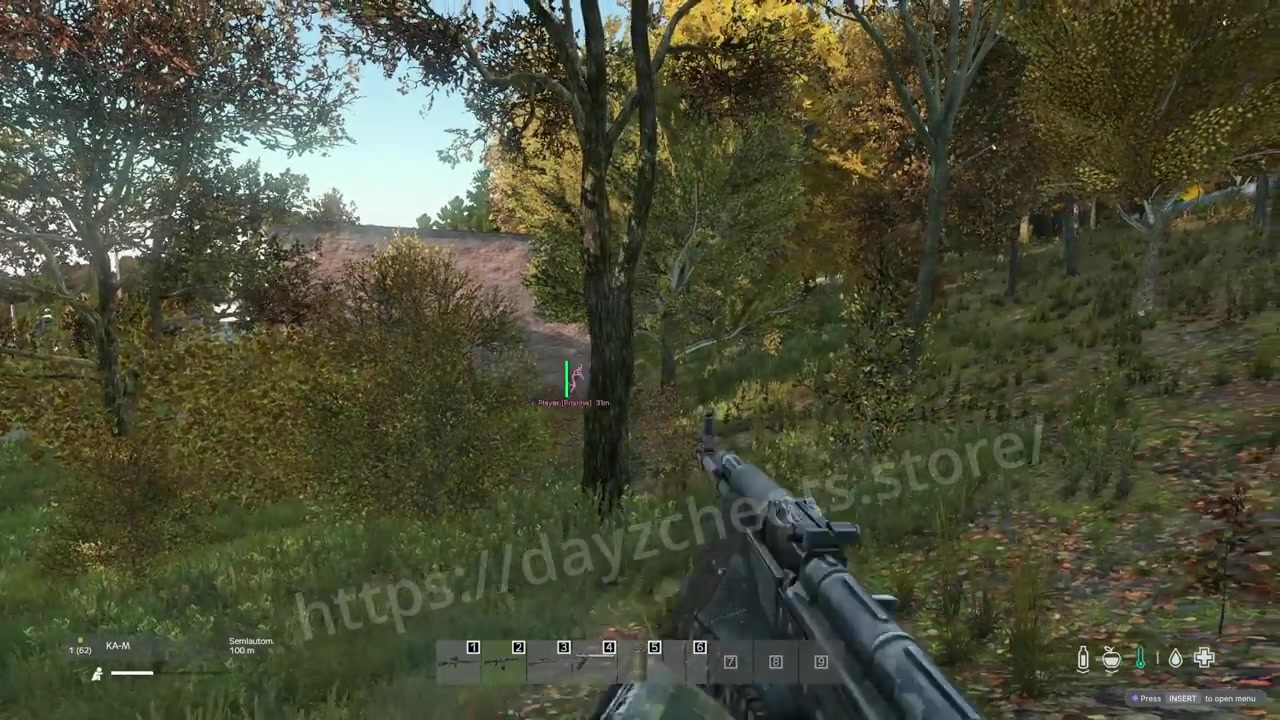
How DayZ admins actually catch cheaters (and what the public cheats miss)
Most DayZ cheater bans in 2026 don't come from BattlEye — they come from human admins reading RCon logs, watching kill replays, cross-checking reports, and syncing federated ban lists (CFTools, OmegaManager, ZomBerry). The technical quality of the cheat matters less than how you play with it.
Most people who've been banned on DayZ don't know what actually caught them. They assume it was BattlEye — the kernel-level anticheat Bohemia uses — and move on. The reality is that a non-trivial share of DayZ bans in 2026 don't come from BattlEye at all. They come from human admins reading logs, watching replays, and cross-referencing ban lists between servers. This is what that actually looks like from the other side.
This isn't a how-to-avoid-detection guide. It's an honest look at what server admins, community moderators, and automated reporting tools do all day. If you play on a populated community server, half the people banned there got caught by one of these flows, not by a kernel scan.
1. RCon and server logs — the primary surface
Every DayZ server writes a text log of every meaningful event: player connect, disconnect, death, kill, chat, item spawn, admin action. The logs rotate per server session. On community servers, the admin reads them live via a tool like CFTools Cloud, OmegaManager, or a custom RCon client.
What they read first is the kill feed, filtered. The filter that catches cheaters is simple: any kill where the shooter had a hit-ratio above a threshold (say, 90% headshots over five engagements), any kill where the distance exceeded 500 m with a weapon not capable of it, any kill where the time-between-shots was below human reflex. None of these flags are definitive on their own. In combination they produce a shortlist of three to five players the admin watches closely for the next hour.
2. Player reports — the volume funnel
Every big community server has a Discord with a #reports channel. Players submit video clips, timestamps, and names. Most reports are wrong — someone got outplayed and thinks the other player had ESP. But the volume matters: if a specific player gets five reports from five unrelated users in a week, the admin opens that player's log history.
What admins look for in reports:
- Prefire patterns. The reported player consistently aiming at a corner before anyone rounds it.
- Impossible knowledge. Looking directly at a bush half a kilometer away where a player is prone, without any audio cue.
- Reaction time outliers. Headshots landed less than 150 ms after a target entered line of sight.
- Movement-while-aiming patterns. Tracking a target that can't be seen directly, visible because the mouse adjusted in a way only an aimbot would produce.
No single clip gets anyone banned — but a cluster of clips showing the same player in the same patterns usually does.
3. Kill cam and replay tools
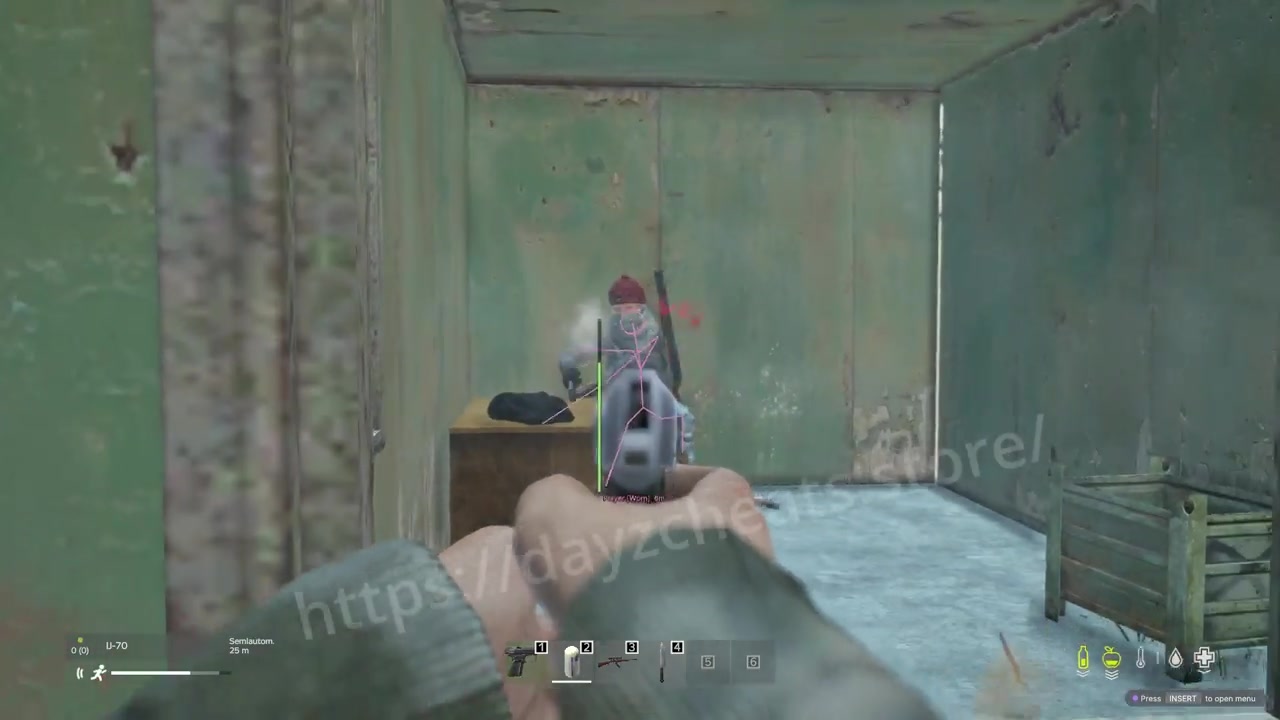
Several community server packages — including Expansion, DayZ-Expansion-Mod, and the Server Kill Feed mod — record a brief replay of every PvP kill. The replay captures the shooter's inputs, the victim's inputs, and the engagement from a free-camera angle. Admins review the ones flagged by the kill-feed filter.
Replays make three things obvious:
- The flick-snap. Human aim either tracks (mouse moves while on target) or flicks (mouse moves to target, stops). Aimbot flicks look different from human flicks — the initial move is linear in a way no hand produces, and the overshoot-correct is absent.
- The lock. Once a snap lands, aimbot aim stays locked to the target's center-of-mass or head with sub-pixel precision even as both move. Human aim drifts.
- The through-geometry awareness. The shooter adjusts position relative to geometry in a way that only makes sense if they know someone is behind it. Classic ESP tell.
The admin doesn't need a confession. A replay plus log timestamps is enough for a server ban. Whether it's enough for a BattlEye GUID ban depends on the admin's reporting discipline.
4. Federated ban lists
This is the piece most players don't know about. Many community server networks federate their ban lists through services like CFTools Cloud, ZomBerry Admin Tools, and private cross-server agreements. When you get banned on Server A, your SteamID (and sometimes your IP and some hardware fingerprinting data) is pushed to a shared ban list that Server B, C, and D all consume.
A single ban on a well-connected community server can lock you out of 40–60 other servers within hours. BattlEye doesn't do this on its own — this is purely community-run infrastructure, and it's the single most effective anti-cheater mechanism in the DayZ ecosystem right now.
5. Movement-speed and ping-anomaly checks
Automated tools flag players whose movement speed exceeds the game's maximum (speed hacks, jittery teleport-style cheats), players whose latency pattern doesn't match a real network connection (tunneled through a server to avoid region detection), and players whose actions-per-second exceed a threshold that no human sustains. These checks rarely produce bans on their own — they produce entries in the admin's review queue.
What they do catch reliably:
- Movement write cheats — anything that teleports the player locally. DayZ is server-authoritative for position, so the teleport doesn't "work," but the client reports the attempted movement, and the server logs the discrepancy.
- Infinite stamina — the player's stamina bar doesn't drain during server-tracked activities.
- Auto-fire bots — click-rates above about 15 per second sustained.
Good read-only cheats produce none of these signals. The ones that write to game memory produce them all. That's the entire architectural difference between a cheat that survives for months and one that dies in a week.
6. Steam account reputation
Admins on modded servers often require minimum account age, minimum playtime, or a non-private Steam profile. Not a ban mechanism per se, but a filter — someone making a fresh Steam account to come back after a ban will trip this. Admins who care enough to run RCon tools also usually care enough to keep an allowlist.
If the goal is to stay banned, this doesn't matter. If the goal is to come back after a ban, this is the single biggest obstacle on community servers — bigger than any technical check.
7. BattlEye — the automated layer
BattlEye runs as a kernel driver on your PC during DayZ sessions. It scans running processes, injected modules, DLL loads, and some memory regions for signatures of known public cheats. When it finds one, it kicks you and reports a GUID ban back to Bohemia, which propagates to all BattlEye-protected servers.
What BattlEye is good at:
- Catching free public cheats whose signatures are in its definition set.
- Detecting debuggers attached to
DayZ_x64.exe. - Logging suspicious API call patterns from external processes.
What BattlEye is not good at:
- Detecting read-only overlays that don't inject into the game process.
- Catching private cheats updated faster than its signature pass.
- Preventing false positives on screen-recording software, overlays from legitimate apps, and other normal Windows software — which is why its ban appeal flow exists.
In practice, most bans in 2026 come from the human admin layer, not from the automated kernel scan. The private cheats that survive BattlEye get caught in the ways described above — by admins watching logs and clips.
What the public cheats miss
Every public DayZ cheat has to compromise somewhere. The free ones all fail BattlEye signature checks within a week of release. The paid ones that write to game memory produce the movement-speed and ping-anomaly tells automatically — you can be undetected by the kernel scan and still get flagged by the server-side logs.
The cheats that stay alive longest do three things: they're read-only (no writes to game memory, so no movement or physics tells), they run from outside the game process (no injection, no DLL load for BattlEye to flag), and they let the player control the aggressiveness of the aimbot — because the cheat can't save you from getting reported for 15 flick-snaps in a 20-minute round. That's the user's job.
The practical takeaway
If you play on a populated community server and get banned for cheating, it was probably not BattlEye. It was probably a human admin. They watched your kill feed, they watched the replays, they read the reports, and they banned you — and then they pushed your name to a federated ban list that locked you out of a dozen other servers at the same time.
The implication is awkward: the technical quality of the cheat matters less than how you play with it. A perfect cheat used obviously still gets reported. A middling cheat used quietly can survive for months. That's not a limitation of the software. That's just DayZ.